Investment property Tampa opportunities are booming, driven by sustained population growth and a dynamic economy.
The city consistently ranks among the top global cities for real estate investment, but success requires understanding the market’s unique pros and cons. From established South Tampa to up-and-coming University Square, each neighborhood offers a different risk-reward profile.
Current Market Snapshot: By the Numbers
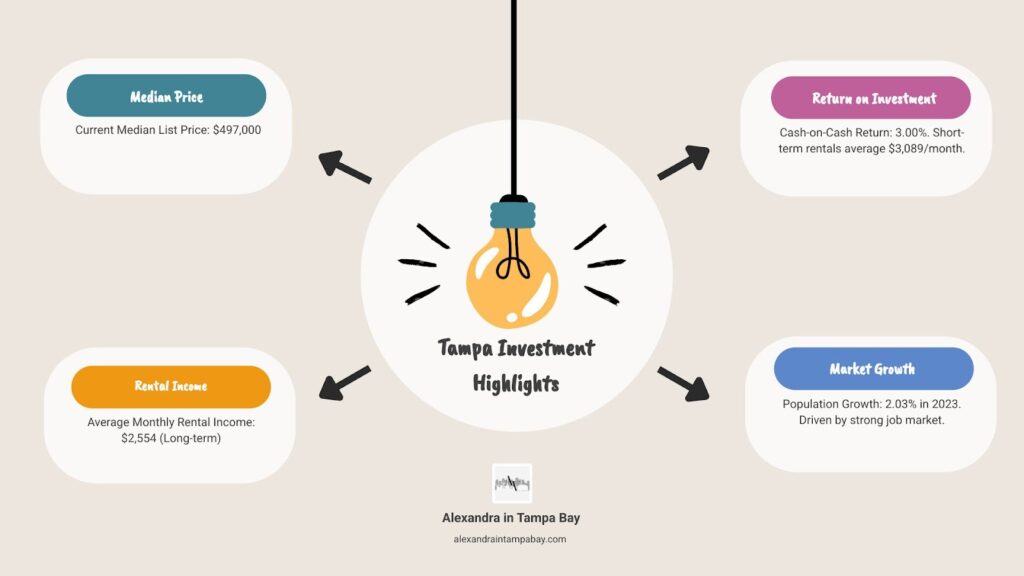
The numbers clearly show why Tampa is an attractive market. The median list price is $497,000, with an average price per square foot of $255.
For rental income, the average is $2,554 per month, with a monthly cash-on-cash return of 3.00% for traditional rentals. Short-term rentals perform even better, averaging $3,089 monthly, fueled by Tampa’s strong tourism.
The market’s vitality is underscored by 2,756 available investment properties and soaring home values. For instance, University Square saw a 45.9% increase in median sale price since 2021, and Apollo Beach prices jumped 33% year-over-year.
This highlights the significant appreciation potential that makes an investment property Tampa a compelling choice. For more guidance, see our Relocating to Tampa: A Comprehensive Guide to Real Estate.
The Pros: High Demand and Strong Appreciation
- High Demand for Rentals: Tampa’s population reached 5.2 million in 2023 (a 2.03% growth rate), ensuring a steady stream of renters. Key drivers include MacDill Air Force Base, which provides a reliable pool of tenants, and sixteen colleges that fuel a robust student rental market.
- Property Value Appreciation: As seen in neighborhoods across the city, property values are rising. This allows you to earn rental income while your asset grows in value, building significant equity.
- Favorable Financial Environment: Florida is a landlord-friendly state, simplifying lease and eviction processes. The absence of a state income tax means higher net returns. Additionally, investors can take advantage of tax benefits by deducting expenses like property taxes, mortgage interest, and repairs.
The Cons: Navigating the Challenges
- High Insurance Costs: Due to weather events and fraud, property insurance in Florida is expensive and can be difficult to obtain. This is a major expense to factor into your calculations, as detailed in reports on Florida’s insurance problem.
- Hurricane and Flood Risk: The Tampa Bay area is vulnerable to storm surge flooding. A thorough flood zone assessment and proper insurance are necessities, not optional extras.
- Landlord Responsibilities: Standard challenges include budgeting for maintenance expenses (1-2% of property value annually) and dealing with problem tenants. It’s also wise to have 3-6 months of reserves to cover the mortgage during vacancies.
- Rental Restrictions: While Florida is landlord-friendly, local rules exist. Hillsborough County may restrict short-term rentals, and many HOAs have rules about rental units. Understanding these nuances is key. Learn more with these 6 Things to Know About Buying a Home in Tampa Bay.
Tampa’s Top Neighborhoods for Real Estate Investment

Finding the right neighborhood for your investment property Tampa purchase is key. Some areas offer steady returns, while others promise rapid appreciation with more risk. The goal is to match an area’s profile to your investment strategy. Let’s explore Tampa’s most promising investment neighborhoods.
| Neighborhood | Median Sale Price | Price Growth (since 2021) | Avg. Rent (approx.) |
| South Tampa | $322,000 | +22% | $2,300 – $2,948 |
| Hyde Park | $835,000 | +34.7% | $2,614 |
| Ybor City | $285,000 | +37.4% | $1,855 |
| Seminole Heights | $475,000 | -1% | $1,861 |
| Riverview | $377,754 (Avg HV) | N/A | N/A |
Established & Upscale: South Tampa and Hyde Park
For investors seeking reliable performers, South Tampa and Hyde Park are top choices. South Tampa (median price $322,000, +22% since 2021) offers consistently high demand due to its proximity to MacDill Air Force Base, creating a built-in pool of reliable military tenants.
Rental rates range from $1,678 to $2,948, reflecting the area’s excellent schools and amenities. Learn more in our Guide to Moving to Tampa Bay: Exploring South Tampa.
Hyde Park is even more upscale (median price $835,000, +34.7% since 2021), attracting young professionals and medical staff from nearby Tampa General Hospital. Tenants pay an average of $2,614 per month for the historic charm and walkability to SoHo’s dining and entertainment.
Historic & Trendy: Ybor City and Seminole Heights
These neighborhoods attract tenants who value character and authenticity. Ybor City, a National Historic Landmark District, has a median sale price of $285,000 and has seen an impressive 37.4% increase since 2021. It draws artists, young professionals, and students to its unique arts and culture scene, with average rents around $1,855.
Seminole Heights (median price $475,000) is known for its early 20th-century Craftsman bungalows. Despite a slight 1% dip since 2021, its strong sense of community, local breweries, and independent restaurants make it highly desirable. Tenants pay an average of $1,861 per month for a home in a genuine community.
Up-and-Coming & High Growth: Tampa Heights and University Square
For investors with vision, these changing neighborhoods offer substantial rewards. Tampa Heights, the city’s oldest suburb, has a median sale price of $501,700. The development of Armature Works into a popular food hall has been a game-changer, driving demand and pushing average rent to $1,705.
University Square represents pure opportunity. With a median sale price of just $299,000, it has seen an astounding 45.9% increase since 2021. The lower entry point and dramatic growth signal a neighborhood in transition, with an average rent of $1,558 that has significant potential to grow. Find more tips in our Home Buying resources.
Suburban & New Construction: Riverview and FishHawk
Suburban communities offer new construction and family-focused amenities. FishHawk (median price $462,000, +14.1% since 2021) is a premier planned community attracting families with A-rated schools and extensive parks. Average rent is $1,952, and tenants are typically long-term, reducing vacancy.
Riverview and Apollo Beach offer new construction opportunities, with Apollo Beach home prices up 33% year-over-year. Buying new means builder warranties and modern systems. These areas attract families and professionals seeking modern homes, similar to other successful communities like Westchase: One of the Top Neighborhoods in Tampa.
Evaluating and Financing Your Tampa Investment

Once you’ve chosen a neighborhood, the real work begins: evaluating properties and securing financing for your investment property Tampa. Proper due diligence is what separates successful investors from those with costly regrets.
Key Factors for Your Tampa Investment Property
- Property Condition: A thorough inspection is essential. Pay close attention to the roof, HVAC, plumbing, and foundation. A charming bungalow with major repair needs can quickly erase your profits.
- Termite Inspection: In Florida’s humid climate, a professional termite inspection is non-negotiable to avoid costly hidden damage.
- Flood Risk Assessment: Tampa Bay is prone to flooding. Don’t rely on seller disclosures; Check your flood zone on FEMA maps yourself. Flood insurance is a critical investment.
- Hurricane Preparedness: Look for features like impact-resistant windows and modern roofing. These not only protect your asset but can also lower insurance premiums.
- Zoning and Rental Restrictions: Verify local zoning to ensure your plans (like short-term rentals) are permitted. If buying in an HOA, scrutinize the rental restrictions, as they can significantly impact your strategy. Find more tips in our Buying a Home resources.
Legal and Regulatory Landscape
While Florida is landlord-friendly, you must understand the rules. This includes landlord-tenant laws regarding property maintenance and eviction procedures. Be aware of short-term rental restrictions in areas like Hillsborough County, which may require special licenses. Always review HOA and condo association rules before purchasing, as they can be very restrictive. Finally, be prepared to Obtain necessary licenses for your rental business.
Financing Your Investment Property in Tampa
Financing an investment property differs from a primary home loan. Lenders see them as riskier, so expect stricter requirements.
- Conventional Loans: The most common option, typically requiring a 15-25% down payment and a higher credit score.
- FHA Loans for Multi-Units: A great option for new investors. You can buy a 2-4 unit property with a low down payment if you live in one of the units.
- DSCR Loans: These are based on the property’s income potential, not your personal income, which is ideal for investors with multiple properties.
- Hard Money Lenders: Offer short-term, high-interest loans for quick purchases or properties that need significant repairs.
Calculating your cash flow is crucial. Subtract all expenses (mortgage, taxes, insurance, maintenance, management fees) from your gross rental income. Budget 1-2% of the property’s value annually for maintenance and keep 3-6 months of rental income in reserve for vacancies. Choosing the right financing is foundational to your success.
The Role of Property Management in Your Success
Being a landlord can be a demanding job, filled with late-night calls and rent collection issues. A great investment property Tampa can quickly feel like a burden. This is where professional property management becomes invaluable.
For a fee, typically 8-12% of monthly rent, a property manager handles the daily operations, turning your investment into a source of truly passive income. This is especially crucial for out-of-state investors or those with multiple properties.
Key benefits include:
- Expert Tenant Screening: Professionals conduct thorough background checks, credit reports, and employment verification to find reliable tenants, saving you from potential damages and lost rent.
- Efficient Rent Collection: Managers handle all aspects of rent collection, from setting up automatic payments to enforcing late fees, removing the awkwardness for you.
- Maintenance Coordination: They have a network of trusted, affordable contractors to handle repairs promptly and efficiently, from a leaky faucet to a broken AC unit.
- Legal Compliance: Property managers stay up-to-date on Florida’s complex landlord-tenant laws, ensuring you remain compliant and avoid costly legal mistakes.
A good manager helps maximize your ROI by setting competitive rent prices, minimizing vacancies, and providing the peace of mind that your investment is being handled professionally. It transforms a hands-on business into the wealth-building asset it was meant to be.
Frequently Asked Questions about Investment Properties in Tampa
Investing in Tampa real estate is a big decision. Here are answers to the most common questions I receive from potential investors.
What is a good ROI for a rental property in Tampa?
While the average monthly cash-on-cash return in Tampa is around 3.00%, a solid investment should aim higher. I recommend targeting an annual rental yield of at least 6-8% (annual rent divided by purchase price). This ensures your investment property Tampa is generating strong cash flow after expenses. Some properties, like those in Hyde Park, may offer lower cash flow but higher appreciation, so it’s about matching the property to your financial goals.
Are short-term or long-term rentals better in Tampa?
It’s a trade-off between profit and predictability. Short-term rentals currently earn more ($3,089 average monthly income vs. $2,554 for long-term). This is driven by tourism and business travel. However, this comes with more intensive management, including frequent cleanings, guest communication, and higher utility costs. You must also steer local regulations, as Hillsborough County has specific zones and licensing for short-term rentals.
Long-term rentals offer predictability. You get steady income, lower operational costs, and far less day-to-day management. The returns may be lower, but so is the stress.
What are the biggest risks of investing in Tampa real estate?
Smart investors understand the risks before buying. In Tampa, the main challenges are:
- Insurance Costs: Florida’s insurance market is challenging. Premiums for rental properties can be very high and may significantly impact your cash flow.
- Hurricane and Flood Risk: Storm surge is a real threat in Tampa Bay. Flood insurance is essential, not optional. You must budget for potential storm-related costs.
- Maintenance Costs: Our humid climate is tough on properties, especially AC units and roofs. Budget 1-2% of the property’s value annually for upkeep.
- Tenant and Market Risks: Even with screening, you can face problem tenants or vacancies. While Tampa’s market is strong, no market is immune to economic downturns that can affect property values and rental demand.
Understanding these risks is the first step to preparing for them and building a successful real estate portfolio in Tampa.
Find Your Next Tampa Investment with an Expert
The Tampa real estate market is full of opportunities, from historic bungalows to new suburban construction. Finding the right investment property Tampa for your portfolio requires more than just browsing listings—it requires deep local knowledge.
You need an expert who understands the drivers behind the market, like why University Square’s prices jumped 45.9% or how MacDill Air Force Base creates steady demand in South Tampa. You need a partner who can spot a solid investment and steer you clear of a potential money pit.
That’s where I come in. My dedicated, knowledgeable, and client-focused approach ensures you get a partner invested in your success. I help investors cut through the noise by analyzing neighborhoods with real data, evaluating properties for risks like flooding and insurance costs, and connecting you with the right professionals to make your investment truly passive.
I know the Tampa market inside and out and understand that every investor has unique goals. Whether you want steady cash flow or are chasing higher short-term rental returns, we’ll find properties that align with your strategy. Don’t try to steer flood zones and HOA rules alone.
Ready to build your real estate portfolio? Explore more resources for moving to Tampa Bay and let’s find your next great investment together.

Be The First To Comment